The Perfect Golden Triangle & Varanasi Itinerary: A Local’s 10-Day Guide (2026)
Planning a Golden Triangle tour with Varanasi can be overwhelming for first-time visitors to India. These iconic destinations represent the perfect blend of India’s rich history, vibrant culture, and spiritual traditions—all packed into a manageable 10-day journey.
This comprehensive North India itinerary combines the classic Delhi-Agra-Jaipur tour with the sacred city of Varanasi, creating an unforgettable 10-day India trip. Unlike typical tourist routes, this guide offers authentic experiences from a local perspective, including hidden gems often missed in standard Varanasi travel guides.
From sunrise at the Taj Mahal to evening ceremonies along the Ganges River, each day of this itinerary is thoughtfully designed to balance must-see attractions with immersive cultural experiences. Whether you’re fascinated by Mughal architecture, spiritual traditions, or simply seeking to understand the heart of India, this day-by-day guide provides the perfect framework for your journey through Northern India’s most treasured destinations.
Day 1-2: Exploring Delhi’s Historic and Culinary Heart
Your Golden Triangle tour with Varanasi begins in Delhi, a city where ancient history and modern energy collide to create a fascinating tapestry of experiences. The first two days of your North India itinerary are dedicated to immersing yourself in Old Delhi’s historic quarters and savoring its legendary culinary scene.
Visit to Jama Masjid and Chandni Chowk
Begin your journey at the magnificent Jama Masjid, India’s largest mosque built by Mughal Emperor Shah Jahan in 1656. This architectural marvel accommodates up to 25,000 worshippers and offers spectacular views of Old Delhi from its southern minaret. Arrive early in the morning to avoid crowds and bring a scarf to cover your head as a sign of respect.
Just a short walk from the mosque lies Chandni Chowk, one of India’s oldest and busiest markets. This 17th-century shopping district thrives with specialized bazaars, each dedicated to different goods. Explore Khari Baoli, Asia’s largest spice market, where the air is heavy with the aroma of exotic spices. Then wander down Dariba Kalan for exquisite silver jewelry or venture into Kinari Bazaar for wedding accessories and colorful fabrics.
Cycle rickshaw ride through Old Delhi
After exploring on foot, hop on a cycle rickshaw for an authentic Old Delhi experience. These three-wheeled vehicles provide the perfect vantage point to navigate the labyrinthine lanes too narrow for cars. Your rickshaw driver will weave through crowded alleys, past centuries-old havelis (mansions), and alongside street vendors selling everything from antique books to brass items.
The rickshaw ride offers a sensory adventure as you absorb the sounds, sights, and scents that define this historic area. Ask your driver to pause at Gurdwara Sis Ganj Sahib, a significant Sikh temple, or the colorful Jain Temple with its bird hospital, both architectural gems hidden within Old Delhi’s chaos.
Chef-led food tour and street snacks
Delhi’s reputation as India’s food capital comes to life on a guided culinary tour. Join a local chef who will introduce you to authentic dishes that rarely appear on restaurant menus. Start with breakfast at Paranthe Wali Gali, a narrow lane famous for serving stuffed flatbreads since the 1870s.
As the day progresses, sample chaat (savory snacks) at establishments that have perfected their recipes over generations. Don’t miss the butter-soaked daulat ki chaat, a cloud-like milk dessert only available in winter months, or the crispy jalebis from Old Famous Jalebi Wala.
For lunch, visit Karim’s near Jama Masjid, renowned for its Mughlai cuisine dating back to 1913. Their slow-cooked mutton nihari and butter-soft kebabs showcase recipes passed down from royal kitchens.
Remember these food safety tips while sampling street food:
- Choose vendors with visible cooking areas and high customer turnover
- Stick to freshly cooked, hot items
- Carry hand sanitizer for before and after eating
Optional: Visit to Gandhi Smriti and India Gate
If time permits on your second day, shift to New Delhi with a visit to Gandhi Smriti, the memorial where Mahatma Gandhi spent his final days before his assassination in 1948. The museum houses the room preserved exactly as Gandhi left it, along with multimedia exhibits chronicling his life and philosophy.
As evening approaches, head to India Gate, the 42-meter high war memorial that glows golden at sunset. The spacious lawns surrounding this monument transform into a lively gathering spot for locals as dusk falls. Consider enjoying a kulfi (traditional ice cream) from one of the vendors while watching families picnic and children fly kites.
Your first two days in Delhi set the perfect foundation for your Delhi-Agra-Jaipur tour by balancing historical exploration with culinary adventures. This vibrant introduction to India prepares you for the spiritual experiences awaiting in Pushkar, the next stop on your 10-day India trip.
Day 3: Pushkar’s Spiritual Charm and Desert Vibes
After the urban intensity of Delhi, the tranquil town of Pushkar offers a welcome change of pace on your Golden Triangle tour with Varanasi. This sacred pilgrimage destination, nestled around a holy lake in Rajasthan, provides a perfect spiritual interlude between the metropolitan energy of Delhi and the royal grandeur of Jaipur.
Brahma Temple and Pushkar Lake
The heart of Pushkar’s spiritual significance lies in its rare Brahma Temple, one of the few dedicated to the creator god in the Hindu trinity. This 14th-century temple, with its distinct red spire and hamsa (swan) motif, stands as a testament to Pushkar’s importance in Hindu mythology. The temple opens early, around 6:30 AM, making it an ideal first stop to avoid midday crowds and heat.
Just steps away lies the sacred Pushkar Lake, surrounded by 52 bathing ghats where pilgrims perform ritual ablutions. According to Hindu tradition, the lake formed when Lord Brahma dropped a lotus flower here. The peaceful waters reflect the surrounding temples and ghats, creating a photogenic scene especially during morning and evening hours.
Remember to respect local customs at both sites:
- Remove shoes before entering temple premises
- Dress modestly with shoulders and knees covered
- Avoid photographing people during prayer or bathing
Following your temple visit, take time to explore Pushkar’s charming bazaar, where stalls overflow with colorful textiles, silver jewelry, and leather goods. The market streets surrounding the lake offer excellent opportunities to purchase handcrafted souvenirs at better prices than you’ll find in larger cities on your North India itinerary.
Evening desert dinner with local music
As dusk approaches, venture beyond town limits for an authentic desert dining experience. Several camps set up in the sand dunes outside Pushkar offer evening programs that combine Rajasthani cuisine with folk entertainment against the backdrop of a desert sunset.
Upon arrival, you’ll likely be welcomed with a traditional tikka (forehead mark) and offered a refreshing drink. Many camps provide comfortable floor seating arranged around low tables, with colorful Rajasthani textiles creating an authentic atmosphere. The dinner typically features regional specialties cooked in earthen pots over open flames.
The culinary highlight of these desert dinners is often dal baati churma—baked wheat balls served with lentil curry and sweetened crumbled bread. Additionally, you might sample gatte ki sabzi (gram flour dumplings in spiced yogurt gravy) and ker sangri (desert beans and berries)—dishes uniquely adapted to Rajasthan’s arid climate.
Throughout dinner, local musicians perform traditional folk songs accompanied by instruments like the ravanhatta (string instrument) and khartal (wooden clappers). Dancers in vibrant attire might showcase ghoomar or kalbeliya performances—traditional Rajasthani dance forms characterized by graceful spinning movements and intricate footwork.
Optional: Sunrise hike to Savitri Temple
For early risers seeking both spiritual merit and panoramic views, a hike to Savitri Temple offers both. This temple dedicated to Brahma’s first wife sits atop Ratnagiri Hill overlooking Pushkar. The ascent takes approximately 30-45 minutes via a well-maintained pathway of roughly 650 steps.
Set your alarm for 5:00 AM to begin climbing in the cool pre-dawn air. Bring a small flashlight or use your phone’s light for the initial portion of the climb. As you ascend, the eastern horizon gradually illuminates, creating spectacular photography opportunities. From the summit, you’ll witness the sun rising over Pushkar Lake and the surrounding Aravalli Hills—a truly magical moment on your 10-day India trip.
Beyond the views, the temple itself holds significance as the shrine of Goddess Savitri, who according to legend, was absent when Lord Brahma performed a crucial ritual, leading to Pushkar’s creation story. The peaceful atmosphere at this hilltop sanctuary provides a perfect opportunity for reflection before continuing your Delhi-Agra-Jaipur tour.
As the day concludes, prepare for tomorrow’s journey to Jaipur, where royal palaces and bustling bazaars await on the next leg of your Golden Triangle tour with Varanasi.
Day 4-5: Jaipur’s Royal Grandeur and Local Life
Continuing your North India itinerary, the majestic Pink City of Jaipur beckons with its blend of centuries-old royal heritage and vibrant local culture. The third point of your Golden Triangle tour with Varanasi offers a perfect balance of architectural splendors and authentic cultural experiences over two full days.
Amber Fort guided tour
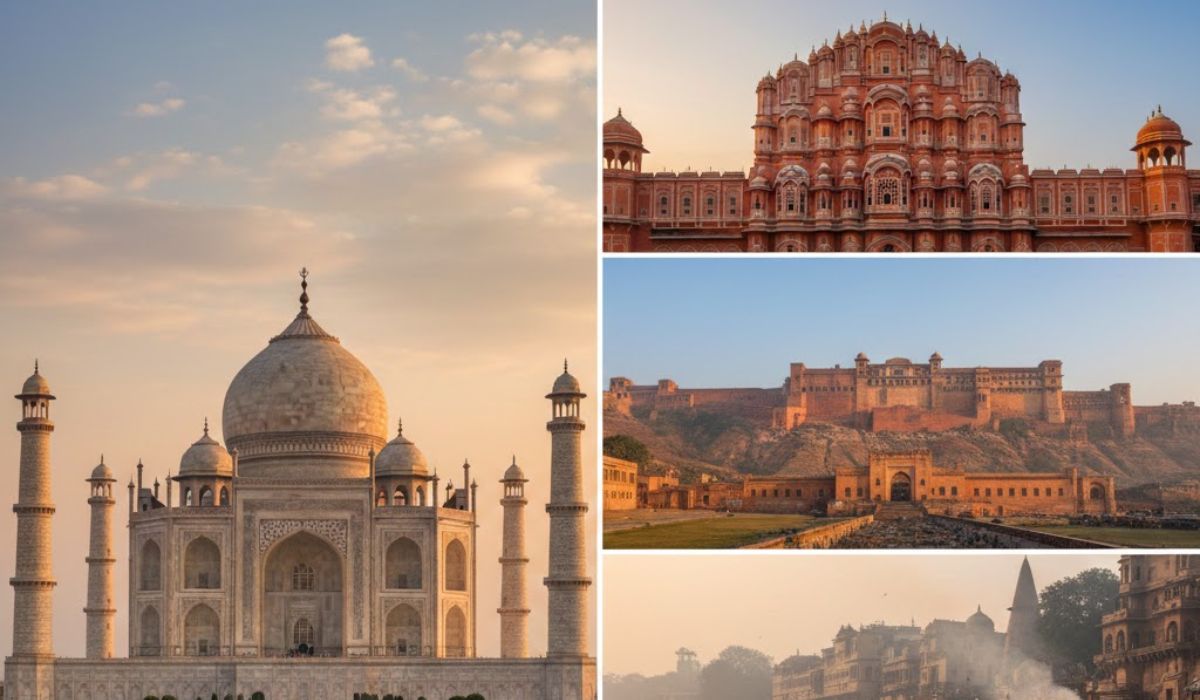
Perched atop a hill overlooking Maota Lake, the magnificent Amber Fort (sometimes called Amer Fort) represents Rajput architectural brilliance at its finest. Arrive early in the morning to avoid both crowds and heat while exploring this UNESCO World Heritage site. The fortress complex, constructed from pale yellow and pink sandstone, features four distinct courtyards connected by winding pathways and grand staircases.
Hire a local guide to truly appreciate the fort’s rich history and hidden stories. They’ll explain the significance of Sheesh Mahal (Mirror Palace), where thousands of tiny mirrors embedded in walls and ceilings create a mesmerizing starlit effect with just a single candle. The guide will furthermore point out the ingenious ancient air cooling system and elaborate water harvesting mechanisms that kept the royal family comfortable despite Rajasthan’s extreme climate.
The fort’s Diwan-i-Aam (Hall of Public Audience) and Ganesh Pol (Elephant Gate) showcase extraordinary craftsmanship with their intricate carvings and paintings. Allow approximately three hours to fully explore the complex before heading back to central Jaipur.
Jaipur City Palace and Jantar Mantar
Devote your afternoon to exploring the heart of Jaipur’s royal heritage. The City Palace, still partially occupied by the royal family, combines Rajasthani and Mughal architectural styles across its expansive complex. The Mubarak Mahal (Welcome Palace) houses the textile museum with its impressive collection of royal garments, including the voluminous attire of Sawai Madho Singh I, who reportedly weighed 250 kg.
Don’t miss the four ornately decorated gates in Pritam Niwas Chowk, each representing a different season through distinctive motifs and deity images. The Chandra Mahal’s seventh floor offers exclusive access (with special ticket) to breathtaking views of the city.
Adjacent to the palace stands Jantar Mantar, an extraordinary 18th-century astronomical observatory built by Maharaja Jai Singh II. This UNESCO site contains sixteen geometric instruments carved from stone, many still accurately measuring celestial movements. The massive sundial, known as Samrat Yantra, remains the world’s largest, capable of measuring time with astonishing two-second accuracy.
Optional: Bollywood dance class or cooking session
On your second day in Jaipur, consider immersing yourself in Indian culture through participatory experiences. Several cultural centers offer beginner-friendly Bollywood dance workshops where instructors break down signature moves from popular films. These engaging 90-minute sessions typically conclude with a full choreographed performance.
Alternatively, join a home-based cooking class where local hosts reveal the secrets behind Rajasthani cuisine’s distinctive flavors. Learn to prepare dishes like laal maas (spicy meat curry) or gatte ki sabzi (gram flour dumplings) using traditional methods and regional spices. Most cooking experiences include a shared meal with your host family, providing genuine insights into local life beyond tourist attractions.
Evening market walk and lassi tasting
As daylight fades, the bazaars of Jaipur’s old city come alive with color and activity. Johari Bazaar dazzles with its jewelry shops displaying Kundan and Meenakari craftsmanship, whereas Tripolia Bazaar specializes in textiles and brassware. Bapu Bazaar offers excellent opportunities for purchasing traditional Rajasthani textiles, particularly bandhani (tie-dye) fabrics in vibrant hues.
During your market exploration, pause to sample Jaipur’s famous thick lassi served in traditional clay cups. The most renowned lassi shop, located near Hawa Mahal, has perfected its recipe over generations, topping each glass with a dollop of clotted cream, saffron, and crushed pistachios. This refreshing yogurt drink provides the perfect accompaniment to your evening walkabout.
The Pink City’s blend of architectural grandeur and everyday cultural experiences creates unforgettable memories on your 10-day India trip before you continue eastward to Agra, home of the iconic Taj Mahal.
Day 6-7: Agra’s Mughal Marvels
The magnificent city of Agra awaits as your Golden Triangle tour with Varanasi reaches its eastern crown jewel. Home to one of the world’s most recognized monuments, Agra offers much more than just a glimpse of the iconic Taj Mahal as you discover the architectural splendors left behind by the mighty Mughal empire.
Sunrise at the Taj Mahal
No North India itinerary is complete without witnessing the ethereal beauty of the Taj Mahal at dawn. Arrive at the East Gate at least 30 minutes before sunrise to secure your place in line—the gates typically open 30 minutes before sunrise year-round. This early effort rewards you with magical moments as first light bathes the pristine white marble in delicate pink and gold hues.
The monument appears to float above its reflecting pools as morning mist often shrouds its base. This optical illusion creates the perfect photography opportunity with significantly fewer crowds compared to daytime visits. Move counterclockwise around the main platform to capture different angles as the changing light reveals new dimensions of the intricate carvings and semiprecious stone inlays.
Take time to appreciate the perfect symmetry and proportions that make this 17th-century mausoleum a masterpiece of Mughal architecture. The main chamber houses the replica tombs of Emperor Shah Jahan and his beloved wife Mumtaz Mahal, for whom this monument was built as the ultimate expression of love.
Remember these practical tips for your Taj visit:
- Carry only essential items as security is strict
- Photography is permitted but tripods are prohibited
- Wear comfortable shoes as you’ll need to remove them or cover them with provided shoe covers
- Consider hiring a guide for historical context and to avoid missing hidden details
Visit to Agra Fort and Baby Taj
After breakfast, head to Agra Fort, a formidable red sandstone fortress that served as the main residence of Mughal emperors until 1638. This UNESCO World Heritage site contains numerous palaces, audience halls, and mosques within its 2.5 km circumference walls. The Diwan-i-Am (Hall of Public Audience) features an intricately carved throne alcove where emperors heard public petitions.
Perhaps most poignant is the Musamman Burj, a marble tower where Shah Jahan spent his final years as a prisoner of his son, gazing at the Taj Mahal across the river. The contrast between the fort’s imposing exterior and its delicate interior pavilions demonstrates the Mughals’ architectural genius in balancing strength with beauty.
In the afternoon, visit Itimad-ud-Daulah’s Tomb, affectionately called the “Baby Taj.” This exquisite marble mausoleum predates the Taj Mahal and served as its architectural inspiration. Built by Empress Nur Jahan for her father, this compact gem features some of the finest marble inlay work in India. The intricate patterns using semiprecious stones like lapis lazuli, carnelian, and turquoise showcase the Persian influence on Mughal design.
Optional: Marble inlay workshop visit
Complete your Agra experience with a visit to a traditional marble inlay workshop, where artisans practice the same pietra dura techniques used to decorate the Taj Mahal. These workshops typically welcome visitors throughout the day, though morning sessions offer better lighting to appreciate the craftsmanship.
Watch master craftsmen meticulously cut and shape tiny pieces of semiprecious stones, fitting them precisely into hollowed marble surfaces to create floral designs and geometric patterns. The process remains virtually unchanged for centuries, with skills passed down through generations of the same families.
Many workshops offer demonstrations followed by an opportunity to purchase authentic inlay work—from small coasters and boxes to elaborate tabletops. While prices exceed typical tourist souvenirs, they reflect the extraordinary labor involved, often requiring weeks or months to complete a single piece.
As your time in Agra concludes, prepare for the final and most profound spiritual stop on your 10-day India trip: the ancient city of Varanasi along the sacred Ganges River.
Day 8-9: Varanasi’s Sacred Soul
Your journey reaches its spiritual zenith in Varanasi, where the sacred Ganges River flows through one of the world’s oldest continuously inhabited cities. This ancient city forms the final and most profound destination of your North India itinerary, offering experiences that have remained essentially unchanged for centuries.
Evening Ganga Aarti ceremony
The mesmerizing Ganga Aarti ceremony at Dashashwamedh Ghat serves as the perfect introduction to Varanasi’s spiritual atmosphere. Arrive by 6:00 PM to secure a good viewing position for this synchronized ritual performed by seven priests dressed in matching outfits. As dusk settles, the priests move brass lamps in circular motions while chanting hymns, creating a hypnotic display of fire, sound, and devotion.
Tips for attending the ceremony:
- Bring minimal valuables as crowds can be dense
- Consider hiring a boat for an alternative view from the water
- Expect the ceremony to last approximately 45 minutes
Sunrise boat ride on the Ganges
Subsequently, awaken before dawn for the quintessential Varanasi experience—a sunrise boat ride along the Ganges. The river transforms into a canvas of golden light as hundreds of pilgrims descend to the ghats for morning rituals. Floating silently past the bathing ghats, you’ll witness intimate moments of prayer, yoga, and cremation ceremonies that encapsulate India’s complex relationship with life and death.
Walking tour of Old Varanasi and ghats
Following breakfast, navigate the labyrinthine alleys of Old Varanasi, where streets too narrow for vehicles wind between ancient temples and centuries-old buildings. These crowded lanes ultimately lead to the city’s 88 ghats—stone staircases descending to the river. Each ghat has its own character and purpose; Manikarnika serves primarily as a cremation site, whereas Assi Ghat hosts yoga sessions each morning.
While exploring, pause at the ornate Kashi Vishwanath Temple, one of India’s most sacred Shiva temples. Nearby, the intricately carved facades of havelis reveal Varanasi’s historical wealth as a center of silk production and religious learning.
Optional: Sarnath Buddhist site visit
On your second day, consider a short excursion to Sarnath, located just 10 kilometers from Varanasi. This tranquil site marks where Buddha delivered his first sermon after achieving enlightenment. The imposing Dhamek Stupa, archeological museum, and peaceful gardens offer a contemplative counterpoint to Varanasi’s intensity. Taxis or auto-rickshaws can easily transport you there for a half-day visit, providing context to the diverse spiritual traditions that have flourished in this region.
Day 10: Departure and Reflections
As your 10-day exploration draws to a close, the final morning in Varanasi offers time for personal reflection on this extraordinary journey through India’s cultural heartland. Varanasi’s incredible energy creates an unforgettable impression that often becomes the emotional highlight of any North India itinerary.
Morning at leisure or final temple visit
Dedicate your final hours to wandering through the fascinating back streets and alleys of Varanasi, where tiny shops, food vendors, and holy cows create an authentic tapestry of local life 1. These meandering pathways provide one last immersion in India’s daily rhythms before returning home.
Alternatively, visit one of Varanasi’s 23,000 temples that you might have missed earlier 1. Although non-Hindus generally cannot enter most Hindu temples, the Tulsi Manas Temple welcomes visitors of all backgrounds 1. This accessible sanctuary offers a peaceful setting for contemplation after your whirlwind Golden Triangle tour with Varanasi.
Be prepared for Varanasi’s sensory intensity even on your final day – the city’s busy roads, constant horn honking, and occasional funeral processions are all part of its raw, unfiltered character.
Tips for navigating Varanasi airport
Lal Bahadur Shastri International Airport sits approximately 22-25 kilometers from central Varanasi areas like Assi Ghat and Godowlia. Plan your departure accordingly with these practical guidelines:
For domestic flights, arrive 2 hours before departure; international travelers should allow 3 hours. The check-in process is straightforward with well-marked counters, though web check-in is highly recommended.
Transportation recommendations:
- Pre-booked private cabs offer the most reliable airport transfer with fixed pricing and direct hotel pickup
- Prepaid taxi counters inside the arrivals hall charge government-regulated fares ranging from 600-1000 rupees depending on your destination
- App-based services like Ola and Uber provide convenient alternatives with real-time tracking
Once at the terminal, you’ll find restaurants, cafes, shops, duty-free outlets, ATMs, and Wi-Fi connectivity to occupy your time before boarding. Security procedures include an initial check before entering the terminal building, so have your ticket and ID ready.
As you depart, carry memories of dawn boat rides, sacred ceremonies, and ancient traditions that make this Delhi-Agra-Jaipur tour with Varanasi extension truly unforgettable.
Conclusion
This Golden Triangle and Varanasi itinerary offers a perfect introduction to North India’s most treasured destinations. Though covering significant ground in just 10 days, this carefully crafted route balances iconic landmarks with authentic cultural immersion. Delhi’s historic quarters provide a vibrant introduction to India’s complexity, while Pushkar offers spiritual respite before encountering the royal splendors of Jaipur. Certainly, witnessing dawn break over the Taj Mahal stands as an unforgettable highlight, yet many travelers find Varanasi’s raw spirituality leaves the deepest impression.
Unlike standard tourist circuits, this journey embraces local perspectives—from chef-led food tours in Old Delhi to home cooking classes in Jaipur and predawn boat rides along the Ganges. These experiences transform an ordinary sightseeing trip into a genuine cultural exploration. Additionally, the practical tips throughout ensure smooth transitions between destinations and maximize your time at each location.
First-time visitors often worry about fitting India’s vastness into a limited timeframe. This itinerary solves that challenge by connecting destinations that showcase distinct facets of Indian heritage—Mughal grandeur, Rajput royalty, ancient spiritual traditions, and contemporary urban life. Every monument, market, and ritual encountered tells part of India’s continuing story.
The memories created during this journey—whether watching artisans practice centuries-old crafts, participating in sacred ceremonies, or simply savoring authentic regional cuisine—will undoubtedly remain with you long after your return home. This Golden Triangle tour with Varanasi extension truly captures the essence of North India’s cultural heart.
Subscribe to Our Newsletter for Exclusive Travel Offers!