India Golden Triangle & Nepal


India Golden Triangle & Nepal
- Duration: 13 Days, 12 Nights
- Itinerary: Delhi – Agra – Abhaneri – Jaipur – Delhi – Kathmandu – Thimi – Bhaktapur – Changu Narayan – Nagarkot – Kathmandu – Delhi
Discover the perfect blend of India’s royal heritage and Nepal’s Himalayan charm in this thoughtfully curated private tour. This journey brings together architectural marvels, spiritual sites, and natural beauty across two vibrant countries.
📅 Upcoming Travel Dates 📅
02 November 2025 – 14 November 2025
A perfect time to explore during India’s festive season and Nepal’s crisp fall beauty.02 February 2026 – 14 February 2026
Enjoy a romantic and serene experience across historical and natural wonders.
Pricing: (UNIT NETT PER PERSON RATES IN USD)
- Each of 02 paying pax double / twin sharing 3140 USD
- Each of 04 paying pax double / twin sharing 2800 USD
- Each of 06 paying pax double / twin sharing 2550 USD
- Each of 08 paying pax double / twin sharing 2340 USD
- Each of 10 paying pax double / twin sharing 2170 USD
- Single Room Supplement 850 USD
Services included:
All ground transportation as detailed in the itinerary using air-conditioned Vehicle
- Tour Guide for the entire duration of the Tour
- English-speaking Guide in Nepal
- Double / twin room with breakfast
- The monument entrance fee mentioned in the Tour Itinerary for India & Nepal
- Heritage Walk in Old Delhi
- International Flight: Delhi – Kathmandu – Delhi
- Dinner on the last day of the Tour
- Water Bottles during the Tour
- Currently applicable taxes
Not included services:
- Visa fees and application for the online Nepal & India Visa
- International airfares & taxes
- Camera and Video charges at the monuments where applicable
- Any expenditure of a personal nature such as drinks, tips, laundry, telephone charges etc
- Insurances (travel cancellation insurance, health insurance etc)
- Any new tax imposed by the government
- Any chosen optional activity / Program
| CITY | HOTELS | NO. OF NIGHTS |
|---|---|---|
| Delhi | Taj Vivanta Dwarka | 3 |
| Agra | Grand Mercure | 1 |
| Jaipur | Shahpura House | 3 |
| Kathmandu | Lo Mustang | 3 |
| Nagarkot | Fort Resort | 1 |
| Bhaktapur | Heritage Bhaktapur | 1 |
*or similar category Hotels.
Check-in / out time is 12 noon at all the hotels, except Delhi (Check-in: 1400 hrs, Check-out: 12
noon) Total Number of Night/s: 12 Nights
IMPORTANT:
1. Kindly note that names of hotels mentioned above only indicate that our rates have been based on usage of these hotels and it is not to be construed that accommodation is confirmed at these hotels until and unless we convey such confirmation to you. In the event of accommodation not becoming available at any of the above-mentioned hotels we shall book an alternate accommodation at a similar or next best available hotel and shall pass on the difference in rates (supplement/reduction whatever applicable) to you.
2. Our offer is based on the usage of base category rooms at the mentioned hotels (unless specified otherwise) and if this category of rooms is not available we shall try to confirm accommodation in next available higher category of rooms and shall advise supplementary cost involved while conveying the status.
3. Cost of the Flight only indicates that the prices are based on the current day flight rate. The actual cost of the Flight may vary at the time of the final flight confirmation. The price difference (more/less) will be mentioned at the time of final confirmation.
ITINERARY
Arrive Delhi. On arrival, you will be greeted and assisted by our representative and transferred to the hotel. (Check-in time 1400 hrs)
DELHI - It is a city that bridges two different worlds. Old Delhi, once the capital of Islamic India, is a labyrinth of narrow lanes lined with crumbling havelis and formidable mosques. In contrast, the imperial city of New Delhi created by the British Raj is composed of spacious, tree-lined avenues and imposing government buildings. Delhi has been the seat of power for several rulers and many empires for about a millennium. Many times the city was built, destroyed, and then rebuilt here. Interestingly, a number of Delhi's rulers played a dual role, first as destroyers and then as creators.
Overnight rest at a hotel in Delhi.
After breakfast, proceed for a visit to Delhi including the following:
Raj Ghat
Raj Ghat is a memorial to Mahatma Gandhi. It is a black marble platform that marks the spot of Mahatma Gandhi's cremation on 31 January 1948, a day after his assassination. It is left open to the sky while an eternal flame burns perpetually at one end. It is located on the banks of the river Yamuna in Delhi on Ring Road, officially known as Mahatma Gandhi Road. A stone footpath flanked by lawns leads to the walled enclosure that houses the memorial.
Heritage Walk in Old City (Around 3-4 Hours)
We will walk you through the charming quarters of Old Delhi. Old Delhi Bazaars have colorful and interesting street food and are crowned with the oldest shops offering many delicacies. You may enjoy a visual treat. The area is also home to several small temples, shrines, old mosques, and protected monuments. Cows wander the streets, and small dharamshalas (rest houses) and pyaus (water stations) attest to the pious contributions of local merchants. The walk is an escorted experience in English for about 3-3.5 delightful hours as we explore the galis (bylanes) of Shahjahanabad (Old City), the city built by Emperor Shah Jahan (1628-1658). You have an opportunity to see what life is really like in this narrow, crowded part of Old Delhi, where adjacent houses share a common wall and everyone knows everyone else.
Gurudwara Bangla Sahib
Bangla Sahib Gurudwara is a Sikh temple located in Delhi. The temple has been named after the 8th Sikh Guru, Guru Harkishan Singh, and is one of the most important places of worship for the Sikh community in Delhi. The temple is well known for its Langar Hall (community kitchen), which is open to all visitors, irrespective of religion. Food is served free of cost in the hall twice a day, and around 8,000 – 10,000 people come to eat every day.
Drive past the Govt. Buildings
New Delhi houses several government buildings and official residences reminiscent of British colonial architecture. Today we will drive past a few of them, such as The Parliament House, and the Rashtrapati Bhawan, once the Viceroy’s residence, now the official residence of the President of India. Designed by Lutyens, it combines Western and eastern styles.
Photo stop at the India Gate
At the center of New Delhi stands the 42 m high India Gate, an "Arc-de-Triumph"-like archway in the middle of a crossroad. Almost similar to its French counterpart, it commemorates the 70,000 Indian soldiers who lost their lives fighting for the British Army during World War I. Under the arch, the Amar Jawan Jyoti commemorates the Indian armed forces’ losses in the Indo-Pakistani War of 1971.
Qutub Minar
Qutub Minar is a soaring, 73 m-high tower of victory, built in 1193 by Qutab-ud-din Aibak. The tower has five distinct stories, each marked by a projecting balcony and tapering from a 15 m diameter at the base to just 2.5 m at the top. The first three stories are made of red sandstone; the fourth and fifth stories are of marble and sandstone. At the foot of the tower is the Quwwat-ul-Islam Mosque, the first mosque to be built in India. A 7 m-high iron pillar stands in the courtyard of the mosque. It is said that if you can encircle it with your hands while standing with your back to it, your wish will be fulfilled.
Overnight at the hotel in Delhi.
After breakfast, drive further to Agra.
AGRA - The city of the inimitable “TAJ MAHAL”
The architectural splendor of the mausoleums, the fort, and the palaces is a vivid reminder of the opulence of the legendary Mughal Empire. While its significance as a political center ended with the transfer of the capital to Delhi in 1634 by Shah Jahan, its architectural wealth has secured its place on the international map. A pleasant town with a comparatively slow pace, Agra is known for its superb inlay work on marble and soapstone by craftsmen who are descendants of those who worked under the Mughals.
On arrival in Agra, check in and rest. Later, visit the following:
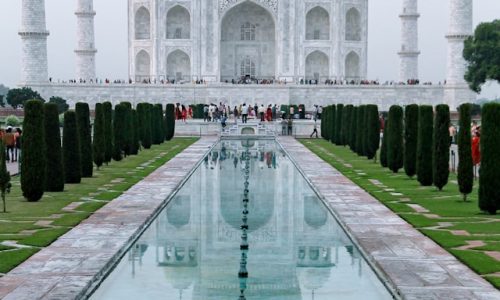
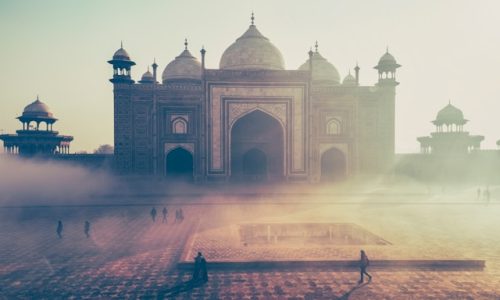
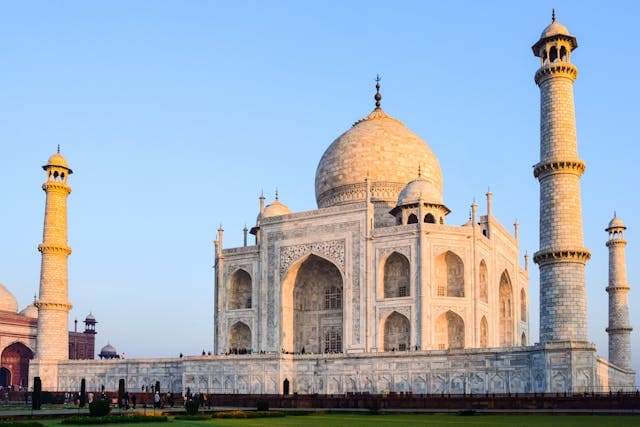
Taj Mahal
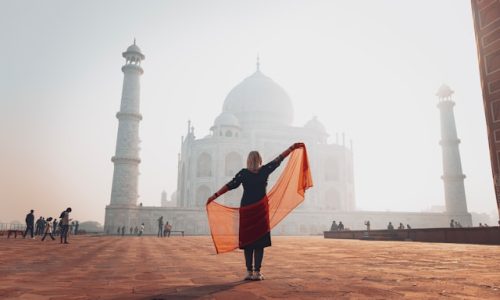
Taj Mahal or Crown of Palaces is a white marble mausoleum, built by Mughal Emperor Shahjahan as a memorial to his beloved wife Mumtaz Mahal. A world-renowned wonder, the Taj Mahal looks the same from all four sides and is widely recognized as "the jewel of Muslim art in India and one of the universally admired masterpieces of the world's heritage." The Taj Mahal is phenomenal not only in its beauty but also in the deep planning and design that went into its making. This enchanting mausoleum was started in 1631 and took 22 years to complete with the help of an estimated 20,000 workers. (It remains closed on Fridays).
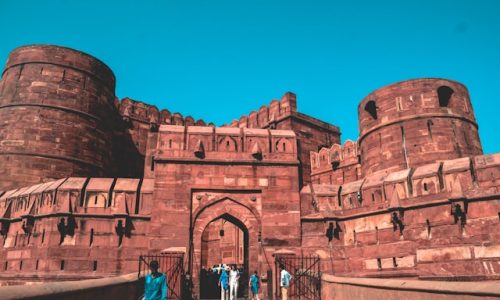
Agra Fort
The great Mughal Emperor Akbar commissioned the construction of the Agra Fort, although additions were made until the time of his grandson Shahjahan. The forbidding exteriors of this fort hide an inner paradise. There are a number of exquisite buildings like Moti Masjid, a white marble mosque akin to a perfect pearl; Diwan-I-Am, Diwan-I-Khaas, Musamman Burj, where Shahjahan died in 1666 A.D.; Jahangir's Palace; Khaas Mahal; and Shish Mahal. The massive Agra fort is considered the predecessor of the Delhi Red Fort.
Overnight at the hotel in Agra.
After breakfast at the hotel in Agra, drive further to Jaipur, en route visit Abhaneri.
Abhaneri
On the way to Jaipur, visit the village of Abhaneri. Abhaneri is a small village with a population of approximately 2,000 people. The village is known for Chand Baori Stepwell. Stepwells were very important in the past, as their purpose was to collect rainwater. The Chand Baori Stepwell is the largest in India.
Later, proceed to Jaipur.
JAIPUR - The fascinating capital of the marvelous state of Rajasthan
Jaipur is popularly known as the Pink City, thanks to the color of its buildings. It was built in 1727 A.D. by Maharaja Sawai Jai Singh II, following a grid system, which made it the only planned city of its time. A young Bengali architect, Vidhyadhar Bhattacharya, designed the city in accordance with Shilpa Shastra, an ancient Hindu treatise on architecture. There are innumerable sagas and stories of culture, traditions, practices, and valor. This diverse land of rich cultural heritage is a royal treat for tourists from all over the world.
On arrival in Jaipur, transfer to the hotel.
Overnight at the hotel in Jaipur.
After breakfast, embark on a city tour in Jaipur, including the following:
Amber Fort
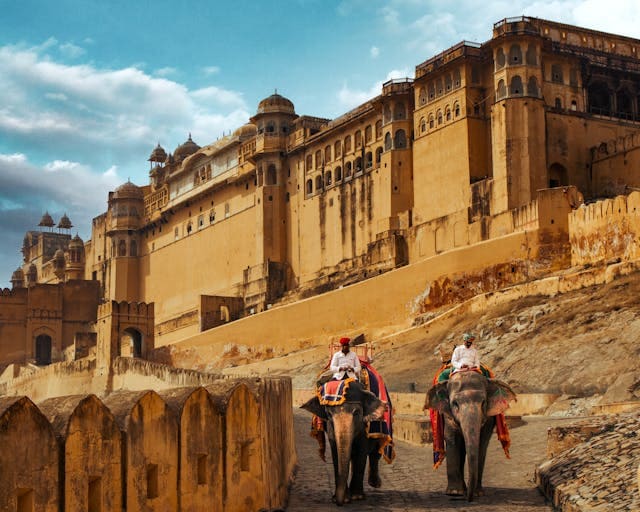
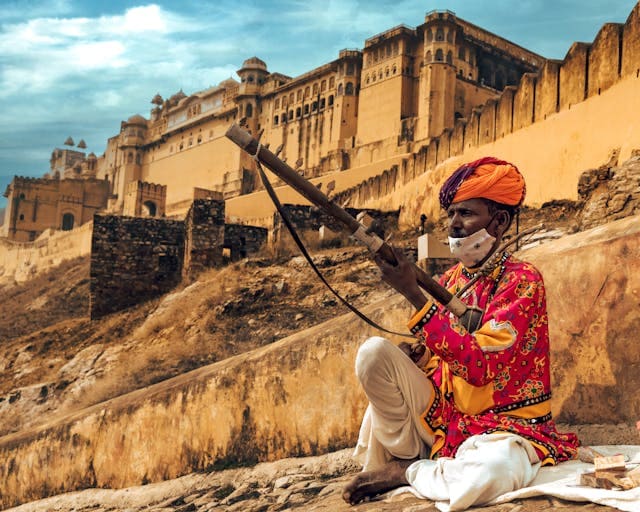
The Amber Fort, set in picturesque and rugged hills, is a fascinating blend of Hindu and Mughal architecture. Constructed by Raja Man Singh I in 1592 and completed by Mirja Raja Jai Singh, the fort was made of red sandstone and white marble. Amber is the classic and romantic fort-palace with a magnificent aura. The interior walls of the palace depict expressive painting scenes with carvings, precious stones, and mirror settings. Built mainly as a safe place for defense against warring enemies, the heavily structured walls could defend the residents within the ramparts of the fort.
Photo Stop at the Hawa Mahal Palace
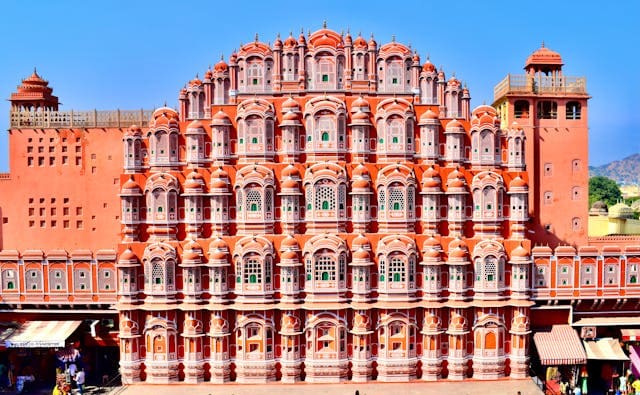
The poet King Sawai Pratap Singh built this palace of winds. This is easily the most well-known landmark of Jaipur and is also its icon. This five-story building overlooking the busy bazaar street is a fascinating example of Rajput architecture and artistry with its delicately honeycombed 953 pink sandstone windows known as 'jharokhas'. It was originally built for the ladies of the royal household to watch everyday life and processions in the city from their veiled comfort.
City Palace
Located in the heart of the walled city, the City Palace Complex gives you an idea about the farsightedness of the founder of Jaipur, Maharaja Sawai Jai Singh II. He left behind a legacy of some of the most imposing and magnificent architecture in the city. Maharaja Sawai Jai Singh II built many buildings, but some of the structures were also built by later rulers. The palace is a blend of Mughal and Rajput architecture, and the ex-royal family still lives in a part of the palace.
Jantar Mantar
The Jantar Mantar is a collection of architectural astronomical instruments, built by Maharaja (King) Jai Singh II between 1727 and 1734. It is modeled after the one that he had built for him in Delhi. He had constructed a total of five such facilities at different locations, including the ones in Delhi and Jaipur. The Jaipur observatory is the largest and best preserved of these. It has been inscribed on the World Heritage List as "an expression of the astronomical skills and cosmological concepts of the court of a scholarly prince at the end of the Mughal period."
Later in the afternoon, explore the local markets of Jaipur.
Overnight at the hotel in Jaipur.
Today is the day at leisure in Jaipur.
Overnight at the Hotel in Jaipur.
After breakfast at the hotel, travel further to Delhi.
On arrival in Delhi, visit the following:
Gandhi Smriti
Currently a museum, Mahatma Gandhi spent his last days at Gandhi Smriti in Delhi. Initially known as Birla House, it was sold to the Government and reopened as Gandhi Smriti. At Gandhi Smriti, people can see the spot where Mahatma Gandhi was shot dead and also get a glimpse of the life teachings of Mahatma Gandhi.
(Remains closed on Monday)
Indira Gandhi Memorial
Indira Gandhi, one of the greatest Indian Prime Ministers, resided here. Later, it was converted into a museum showcasing rare photographs of Indian history, pictures of Indira Gandhi with her father Jawaharlal Nehru, and other memorabilia from Indira Gandhi’s life.
(Remains closed on Monday)
Overnight at the hotel in Delhi.
On-time transfer to the Delhi International Airport to board the flight to Kathmandu.
On arrival, you will be greeted and assisted by our representative at the Kathmandu Airport. (Check-in time 1500 hrs)
Flying into Kathmandu on a clear day is a panoramic feast for the eyes. The views of snow-capped mountain peaks sprawling below you begin a whole chain of memorable experiences that will stay with you forever. Welcome to Nepal for a memorable journey! You will be received at the airport on arrival and transferred to the hotel in Kathmandu.
Kathmandu is the historical and cultural heart of Nepal. It has been a popular destination ever since Nepal opened its doors to visitors. The city is a melting pot of wonderful cultures: Hinduism, Tibetan Buddhism, and the Western way of life. This tour of Kathmandu will offer you an opportunity to capture an incredible portfolio of images.
Overnight at the hotel in Kathmandu.
After breakfast at the hotel, visit the following in Kathmandu:
Pashupatinath Temple
Early in the morning after breakfast, head towards Pashupatinath, the most popular Hindu shrine dedicated to Lord Shiva. Pashupatinath, a UNESCO World Heritage Site, is considered the holiest place in Nepal to cremate the departed. The series of Shiva Lingas, temples scattered all over the place, and the holy saints from India and Nepal signify spirituality. Within the temples, there are magnificent shots you will want to capture.
Boudhanath
After visiting Pashupatinath Temple, drive to Boudhanath. Boudhanath is one of the biggest Buddhist shrines in the world. In this UNESCO World Heritage Site, one can observe Buddhist monks absorbed in prayer surrounding the stupa. The Tibetan culture is well observed in the backstreets of Boudhanath. The place offers a tremendous opportunity to capture the authentic Tibetan culture.
Patan Durbar Square
Patan Durbar Square is known for its cultural and historical richness. It offers a wide array of wooden arts in the form of monumental historic edifices that reflect the architectural influence in the city during ancient and medieval times. The creative wooden carvings depicting the sutras of Lord Kamadeva (God of Human love or desire) are scattered throughout the pagoda-style temples in the backstreets. Patan, the city of artists, offers many visual treats.
Overnight at the hotel in Kathmandu.
After breakfast, embark on the city tour in Kathmandu, visiting the following:
Kathmandu Durbar Square
Kathmandu Durbar Square is one of the three medieval palace squares. An ancient courtyard with incredible craftsmanship that reflects the local culture and tradition of yesteryear. The stone-paved streets, pagoda-style edifices, and religious monuments inclusive of many different deities are exquisitely displayed as far as the eye can see. Stroll through the streets and capture the daily activities of the locals. Small vendors selling a variety of trinkets, gregarious shops, and busy streets are all full of life.
Swayambhunath
After Kathmandu Durbar Square, visit Swayambhunath, commonly known as The Monkey Temple. Swayambhunath is a hillock overlooking the Valley. Capturing the Buddhist monks chanting prayers throughout the long series of staircases leading to the main temple is quite an adventure in itself. The entire complex includes a white Stupa and other temples depicting Buddha and other Gods in their several mudras. Everything about this magnificent place can be interesting. Even a monkey minding his own business can be a nice pick.
Kirtipur:
Kirtipur is recorded as the ancient capital of Nepal. It is about 5 km southwest of Kathmandu City and offers superb views of Kathmandu, the entire valley, and the Himalayas beyond. Kirtipur is bordered in the west by Champa Devi Hill, the third-highest peak in the Kathmandu Valley at 2,278m and a great spot for a day hike. To the east is the Bagmati River that flows through the ragged cliffs of Chobar Gorge and Kathmandu Valley’s only natural lake, Taudaha, which is situated in the southern part of Kirtipur. These natural features, in addition to caves and trails, make Kirtipur an ideal location to explore on foot or by bike.
Overnight at the hotel in Kathmandu.
After breakfast in the Hotel, drive further to Nagarkot. Enroute visit Changu Narayan Temple.
Changu Narayan Temple
Changu Narayan Temple is considered to be the oldest Hindu Temple in Nepal. The temple offers an authentic experience of the ancient Nepali art of Nepal. Dedicated to Lord Vishnu, the temple was built in the 4th Century AD. Inside the temple precinct are some exquisite stone sculptures of Hindu deities from the Licchhavi period (4th to 9th centuries). After the visit, drive further to the hill station at Nagarkot. Nagarkot is famous for its views of the sunrise over the Himalayas (depending on the weather on that particular day). Overnight at the Hotel in Nagarkot.
After breakfast in the morning,
check out and drive further to Bhaktapur. Visit the famous Bhaktapur Darbar Square on arrival in Bhaktapur. Bhaktapur Durbar Square is a cluster of architectural masterpieces of medieval Nepal. The square is full of temples, shrines, and sculptures namely the Golden Gate, 55 Windows Palace, Big Bell, Dog Barking Bell, Taleju Temple, Vatshala Temple, Statue of Bhupatindra Malla, etc. Bhaktapur offers an opportunity to capture the traditional lifestyle of the valley and its historic heritage. Overnight at the Hotel in Bhaktapur.
On-time transfer from Bhaktapur to International Airport in Kathmandu for the return flight to your Home country.
Here you will end the journey with a farewell dinner.
Later on time transfer to the airport to board a flight for back home.
GALLERY / PHOTOS


BOOK A CALL BACK WITH AGENT TODAY
MORE PACKAGES
OTHER TRAVEL PACKAGES